This Practice Will Transform Your Women’s Circles

— In this Article —
In all but one women’s circle I’ve participated in between 1999 and the current day—excluding those I facilitate—the approach to sharing has been to let sharing happen organically, where only those who speak up get the floor. This approach fosters neither equity nor inclusion, regardless of the facilitator’s intent. This post offers an alternative.
What I mean by ‘equity and inclusion’ when it comes to sharing
It's quite simple: in the circles I facilitate—and what I'd love to see all sharing circles incorporate—is the practice of holding space for the same amount of time for each sister, whether she chooses to share with words or silence.
By ‘true equity and inclusion in sharing,' I also mean that sharing does not occur popcorn style but rather moves around the circle beginning with the sister who volunteers to share first.
Note: I spend a few minutes riffing on why this is such an important practice, which you can listen to below if you’re so inclined.
What I don’t mean by ‘true equity and inclusivity in sharing’
This is not a formal exercise in DEIB (diversity, equity, inclusion, and belonging); it's simply about creating an equal playing field for everyone to share.
It's also never about "forcing" anyone to share who doesn't want to share; it's simply about witnessing and holding space for every sister present.
Why this even matters
Let me explain by means of my own story. I’m an introvert with a wee bit of social anxiety. When I’m in a group—no matter how safe I feel in that group—I tend to sit back and let others share first.
In nearly ever circle I’ve ever sat in that wasn’t facilitated by me, the facilitator opens the circle for sharing. There is usually an awkward moment before the first sister shares. But—like clockwork—the first few sisters collectively take up the majority of the time available for sharing. So then the remaining sisters—usually the more introverted ones—either shorten their shares or pass altogether because of time constraints. I am that sister.
It is frustrating to feel like the only way I can take up space is if I’m willing to disrespect the remaining sisters’ opportunity to share. It is also frustrating to experience facilitation that favors the extroverts and those who take up more space than what’s equitable. And, it’s frustrating to leave a sharing circle without having a meaningful opportunity to share.
But when the facilitator ensures that each and every sister receives the same amount of time to share, she demonstrates through her actions that she values equity. And when the facilitator has a practice of holding space for each sister—whether she speaks or sits in silence—each sister gets to take up space and be witnessed. This creates a far more powerful experience for everyone, but especially for the sisters like me who might not otherwise feel comfortable taking up space.
Want to hear me expand on this with a little more depth and story?
I recorded a six-minute riff on why this matters so much. If you need convincing, please consider listening to the audio track, watch the YouTube video, or read the transcript that’s hidden in the accordion.
[2025 UPDATE: Note that I reference a training in it that I’m not currently offering.]
Audio version
YouTube version
-
Note that this is an unformatted transcript.
Sisters, Kristi Amdahl here. I just wanted to take a moment to talk a little bit about this whole equity and sharing piece that is a fundamental teaching in the Sacred Circle Facilitator training program that I'm offering this fall of 2024, but it's also an element that, um, it's a practice that I employ in every single Sacred Sister Circle that I facilitate.
And I want to talk about why that is, why I think it's so important, why I would love to see every freaking sacred sister circle throughout the world employ this practice. So I'm just going to share my own lived experience. I am an introvert and for much of my life, I did not feel safe or comfortable taking up space.
I didn't feel worthy of taking up space. For some reason, I always felt like other people deserved like having a floor before I did. And this goes back to my early childhood. So when I'm sitting in a circle. And the facilitator or the circle leader opens the floor for sharing. Usually they're very, you know, they're very conscientious in the sense that they'll invite everyone who feels called to share, to share.
And it's not like there's a hierarchy where this person shares first and this one share a second. I mean, there are some circles that do sort of like an elders first and everything, but in general, it's usually like popcorn style who feels like sharing me. Okay. That person shares. Well, as an introvert who doesn't feel comfortable taking up space and who self worth used to be in the toilet, I would sit back and I would always defer to everyone else in the circle.
And so the extroverts often would speak up first, someone with a burning desire to share would speak up and there wasn't really much attention paid to how long each sister shared. So the people who would share earlier in the circle often took up, um, more than what their fair share of time was. By the time everyone else shared, because I kept deferring to everybody else by the time everyone else shared.
And it's like, I'm the only one standing, right. We're out of time. Or at least I feel the pressure of being out of time. Right. It's like if I were to share six minutes, like person one, two, and three shared, we would be running over time. And when I have that pressure on myself, this is all self imposed pressure, mind you.
But when I have this pressure on myself, I don't share like I would share. Otherwise, I don't share what's truly on my heart. I don't feel like everyone cares enough to hear what I have to say. And so that circle is not the powerful experience for me that it could have been. If it had been facilitated with a concept of equity and sharing in mind.
So on one side of the coin, you could say, well, this is my own responsibility. I need to take ownership. You know, I have personal agency. I can push through my comfort zone or discomfort zone and share it anyway. Right. And that's on me. Okay. But as a facilitator of sacred sister circles, and as someone who believes that.
Through good facilitation, we can help elevate the collective consciousness of humanity and create a totally different life experience for the sisters who are in circle with us. I feel like it's my duty and my responsibility to create a container to facilitate in such a way where there is none of this, like none of this dynamic that I was just sharing about how I used to be.
And so there's ways we do that. And this is part of the sacred circle facilitator training that I'm offering. I also talk about a little bit in some blog posts, but creating a system where every sister has equal time to share, whether it be in words or silence. And I'm going to tell you that this is one of the most cherished elements and practices in my circles.
This is what sisters time and time again, come to me after circle and are like, Oh my gosh, thank you so much. And another thing, another thing that often happens. So if each, if each sister in a circle, for example, gets five minutes to share, she shares maybe for a minute and a half. And then she goes silent.
We're still holding space for her for full five minutes. Even if she doesn't say anything, we're holding space for her. And then maybe after a minute of silent, she speaks again and tears are running down her face. And she's having this like massive, massive epiphany. Something's happened. There's been a major shift in her.
I want to cry right now thinking about it. This happens. This happened just the other day in the last circle I had facilitated. It's like in silence. Is when the magic happens. It's that way in coaching as well, but we're not talking about coaching here. We're talking about sacred circles, but anyway, it's that silence.
And most of those opportunities get missed when we facilitate circles in a way where it's like, okay, I'm done sharing here. Pass the talking piece. Most of those opportunities get missed. So equity and sharing. I hope this video, maybe shed a little bit of light on why I think it's so important. Um, I promise it doesn't have to be clunky.
I mean, there's, yes, there's timekeeping involved and stuff, but it's very, it's a very smooth transition and the way I do it. So if you're interested in this concept, If you're interested in becoming a freaking incredible rockstar Sacred Circle facilitator, a facilitator of transformation, whatever, if you're interested in that, I invite you to explore the Sacred Circle facilitator training program that I am offering.
It's truly groundbreaking and one of a kind. A link will be in the show notes, not show notes, in the description. This is not a podcast. Anyway, thank you.
What this looks like in practice
This is a bit nuanced, and it looks differently for in-person circles vs online circles.
Regardless of the location of the circling container, there needs to be a time-keeper, who's probably (but not necessarily) also the facilitator. The math's simple: divide the available time by the number of sisters present, and be sure to include a small buffer. The timer starts once a sister is handed the talking piece.
Then, the time-keeper will gently and respectfully indicate when it's time for the sister to wrap up her share and pass the talking piece.
I have been doing this since May of 2022, and I've found that it's neither clunky nor disruptive when done with mindfulness and intention. For example, I normally wear a watch with a timer, and it quietly vibrates when time’s up. When it does, I ding my singing bowl (for in-person circles) or wave a feather across my computer screen (for virtual circles) to signal that it’s time to pass the talking piece. And the cycle repeats.
[Note: Once the battery craps out on my watch, I’ll probably just switch to using one of those meditation timer apps on my phone.]
This practice is deeply cherished and embraced by the sisters who regularly gather with me in sacred circle. It creates a truly intentional space where sisters can really relax and be present, knowing that their sisters are holding space for them as their thoughts percolate—and without feeling rushed to pass the talking piece. Sometimes the really raw, really vulnerable shares come after an extended bout of silence—shares that would have been missed in absence of this equity in sharing practice.
Final thoughts
If you facilitate women’s circles, I encourage you to explore how you might integrate an equitable and inclusive sharing practice. Integrating it successfully requires skillful facilitation—especially if you decide to integrate it into an existing circle. But the transformative power it brings is unmatched.
I do offer a tiny (on-demand) course—Facilitating Women’s Circles—that includes a section on this and other important topics that you’re not likely to find in other trainings. If you are interested in exploring that offer, please visit my Shop.
And, if you’d like to download my free Guide to Facilitating Women’s Circles, please click that link.
That is all.
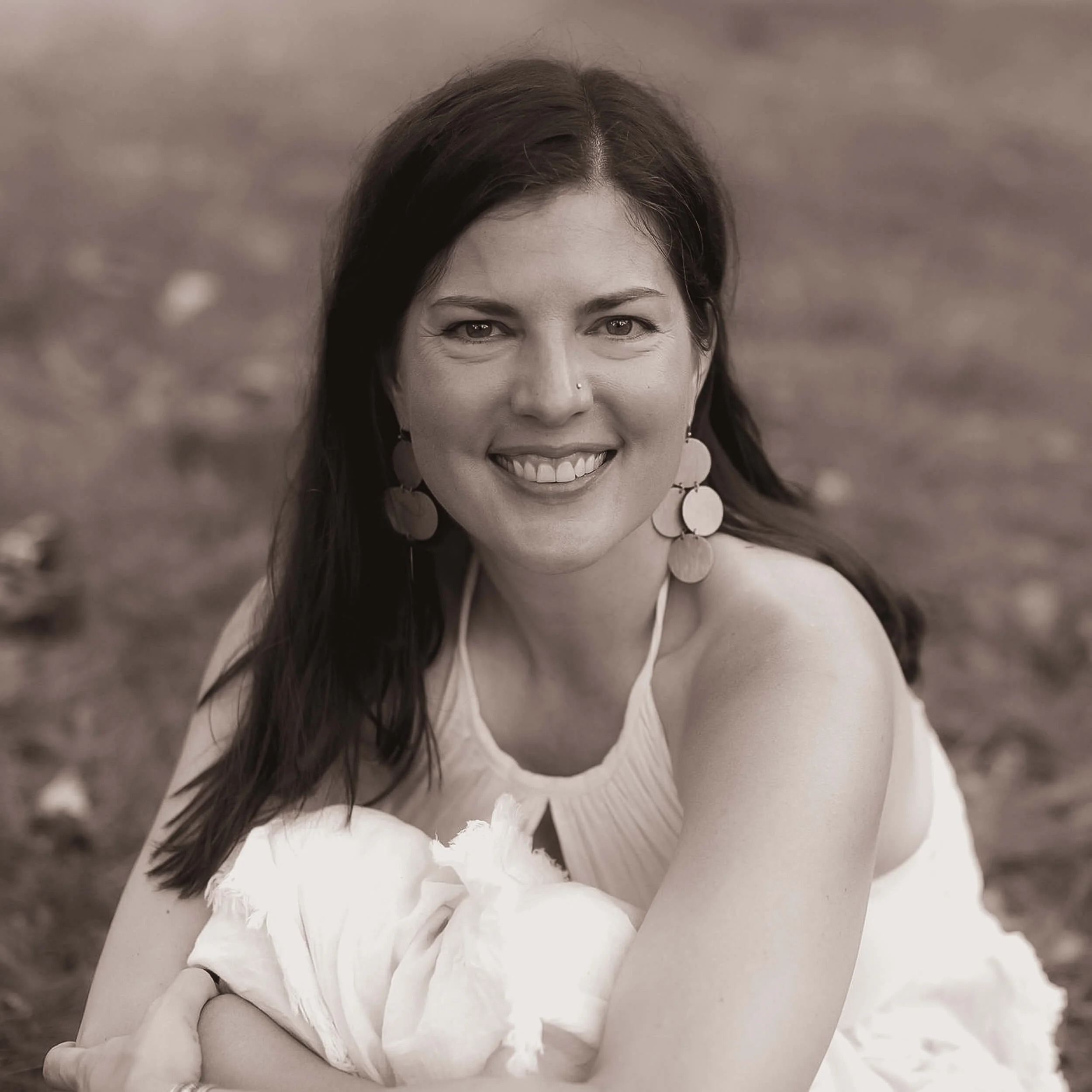
Hey! I’m Kristi—a Wayfinder Master Coach and Women’s Circle Facilitator.
I’m committed to helping fed up feminists like you navigate capitalism, patriarchy, and white supremacy from a place of empowerment and deep inner alignment. I serve humans—mostly women—who yearn to ‘be the change’ and seek support from someone who truly gets it.
